

- Academics+
- Colleges & Institutes
- Undergraduate
- Graduate
- International Education
- FACULTY LISTINGS/SUPERVISORS INFORMATION
- College of Architecture and Civil Engineering
- College of Architecture and Urban Planning (CAUP)
- College of Art and Design
- College of Chemistry and Life Science
- College of Computer Science
- College of Economics and Management
- College of Environmental Science and Engineering
- College of Foreign Languages
- College of Marxism
- College of Materials Science and Engineering
- College of Mechanical and Energy Engineering
- College of Metropolitan Transportation
- School of Information Science and Technology
- School of Mathematics Statistics and Mechanics
- School of Physics and Optoelectronic Engineering
- School of Sociology
- Admission+
- Research+
- Global+
- Life @ BJUT+
- About+

BJUT Today
Top Views


Helpful Links
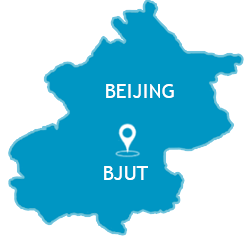
Address
100 Pingleyuan,
Chaoyang District,
Beijing 100124,
China

Copyright © 2020 Beijing University of Technology. All Rights Reserved.